
 Wildlife
of Romania
Little Egret
Herons, Storks, Ibises & Pelicans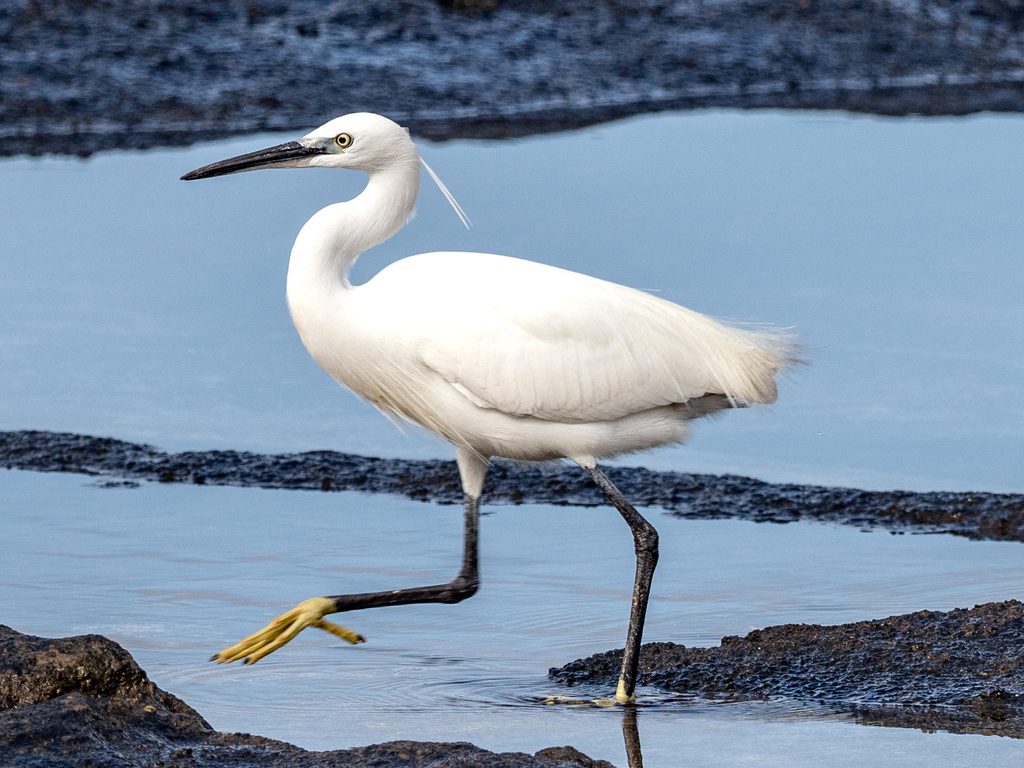
Photo: Bengt Nyman · CC BY 4.0 (May be cropped or resized)
Egretta garzetta
Basic stats
Diet
Mainly aquatic invertebrates, with fish and other small vertebrates
Habitat
Shallow fresh, brackish and coastal wetlands
Range
Africa, southern Europe and much of Asia, with expanding populations farther north
Clutch size
Usually 3–5 eggs
Incubation period
About 3 weeks
Size
55–65cm
Wingspan
88–106cm
Weight
Averages about 312g
The Little Egret is a small, slender white heron found across Africa, southern Europe and much of Asia, with populations established farther north in Europe. Adults have a fine black bill, long black legs and, in the western form, contrasting yellow feet. Breeding plumage includes delicate plumes, while the bare facial skin and feet may become more vivid. The species uses shallow fresh, brackish and coastal wetlands, feeding both in water and on exposed ground. (Wikipedia, general species account)
A mobile hunter, it walks, runs, stirs the substrate with its feet and may use its wings to disturb or shade prey. Aquatic invertebrates dominate the trait profile, with fish and other small vertebrates also taken. Birds nest colonially, often alongside other waterbirds, building stick platforms in trees, bushes or reedbeds. Both parents incubate a clutch of three to five eggs for roughly three weeks and feed the young. (Wikipedia, general species account; EltonTraits, Wilman et al. 2014)
Where to see Little Egret in Romania
GBIF records grouped by protected area. They show where the species has been reported, not that it is there now, and they are not population counts.
Recorded in 12 protected areas (1969–2026). The 8 with the most records:
- Danube Delta Biosphere Reserve: 2,245 records (1969–2026)
- Balta Albă - Amara - Jirlău: 50 records (2012–2023)
- Iron Gates Natural Park: 33 records (2018–2025)
- Văcărești Nature Park: 28 records (2009–2026)
- Parcul Natural Comana: 27 records (2012–2024)
- Mestecănișul de la Reci și Bălțile de la Ozun-Sântionlunca: 11 records (2023–2026)
- Munții Almăjului - Locvei: 10 records (2018–2023)
- National Park Munții Măcinului: 9 records (1997–2024)
Quick answers
- What does the Little Egret eat?
- Mainly aquatic invertebrates, with fish and other small vertebrates
- What habitat does the Little Egret live in?
- Shallow fresh, brackish and coastal wetlands
- Where is the Little Egret found?
- Africa, southern Europe and much of Asia, with expanding populations farther north
- How many eggs does the Little Egret lay?
- Usually 3–5 eggs
- How long are the eggs of the Little Egret incubated?
- About 3 weeks
- How big is the Little Egret?
- 55–65cm
- What is the wingspan of the Little Egret?
- 88–106cm
- How much does the Little Egret weigh?
- Averages about 312g