
 Wildlife
of Romania
Great White Pelican
Herons, Storks, Ibises & Pelicans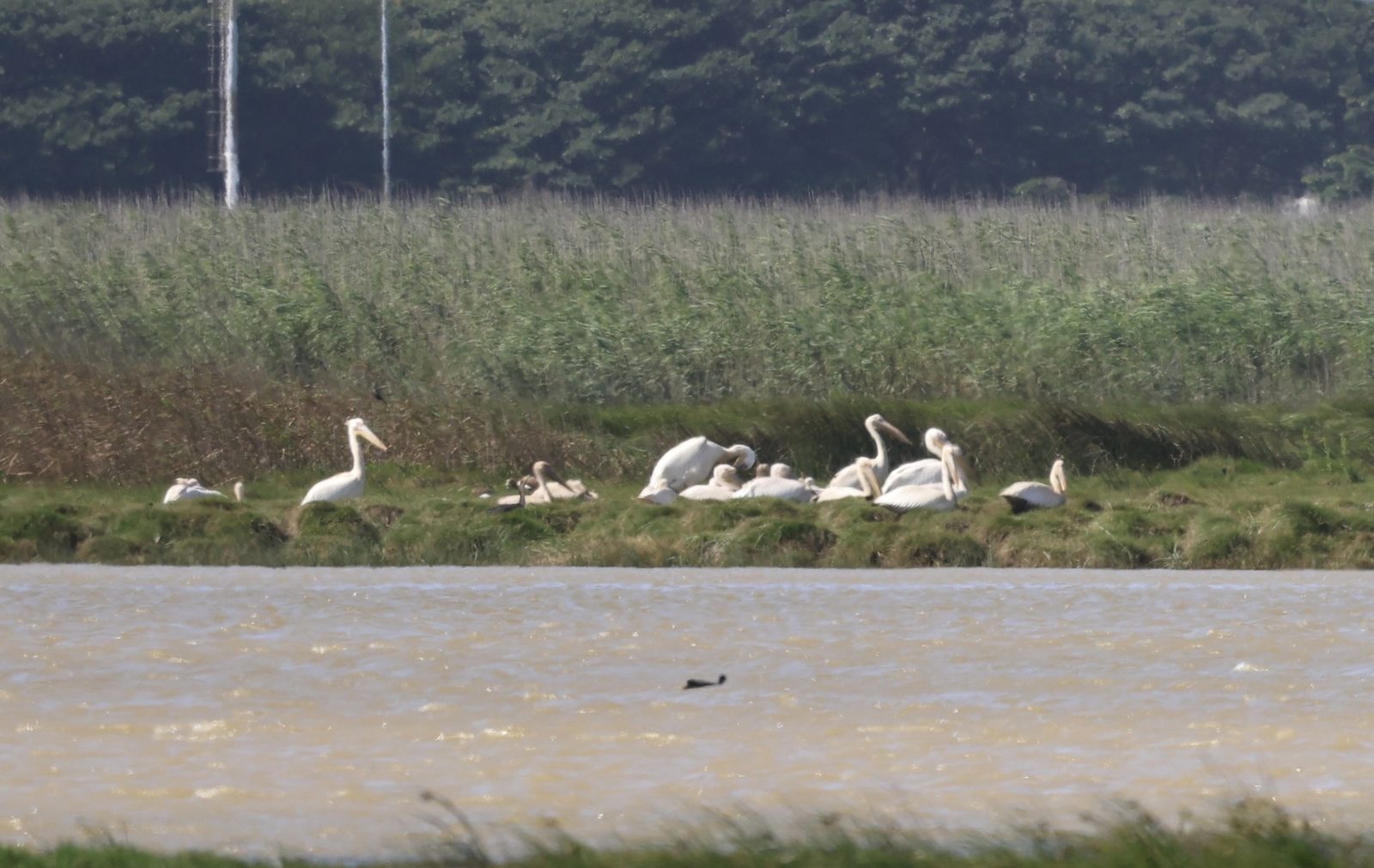
Photo: (c) Cricket Raspet, some rights reserved (CC BY) · CC-BY (May be cropped or resized)
Pelecanus onocrotalus
Basic stats
Diet
Primarily fish; also aquatic invertebrates, amphibians and bird eggs
Habitat
Lakes, rivers, lagoons, marshes, deltas and sheltered coastal waters
Range
Africa, southeastern Europe, western and central Asia, and parts of South Asia
Clutch size
1–3 eggs
Incubation period
29–36 days
Size
137.16–167.64 cm
Wingspan
274.32–335.28 cm
Weight
9.07–11.79 kg
Great white pelicans are enormous waterbirds with white plumage, black flight feathers and long bills carrying expandable yellow throat pouches. Their broad range includes Africa, southeastern Europe, western and central Asia and portions of South Asia. They inhabit freshwater or saline lakes, broad rivers, lagoons, deltas and shallow marshes. Some populations migrate considerable distances between breeding colonies and nonbreeding feeding areas, often traveling in coordinated formations. (Animal Diversity Web)
Fish form most of the diet, although these pelicans also consume worms, crustaceans, amphibians and occasionally bird eggs. Groups may swim in a coordinated line or V formation, driving fish into shallow water before scooping them into their pouches. Colonies nest densely on islands, sandbanks, mudflats or reed beds. Both parents incubate the eggs and feed their young with food delivered from the bill or pouch. (Animal Diversity Web)
Where to see Great White Pelican in Romania
GBIF records grouped by protected area. They show where the species has been reported, not that it is there now, and they are not population counts.
Recorded in 5 protected areas (1876–2026).
- Danube Delta Biosphere Reserve: 2,704 records (1876–2026)
- Rezervația Naturală Roșca-Buhaiova: 105 records (1991–2024)
- National Park Munții Măcinului: 20 records (2005–2024)
- Balta Albă - Amara - Jirlău: 18 records (2016–2023)
- Letea Forest: 6 records (1994–2023)
Quick answers
- What does the Great White Pelican eat?
- Primarily fish; also aquatic invertebrates, amphibians and bird eggs
- What habitat does the Great White Pelican live in?
- Lakes, rivers, lagoons, marshes, deltas and sheltered coastal waters
- Where is the Great White Pelican found?
- Africa, southeastern Europe, western and central Asia, and parts of South Asia
- How many eggs does the Great White Pelican lay?
- 1–3 eggs
- How long are the eggs of the Great White Pelican incubated?
- 29–36 days
- How big is the Great White Pelican?
- 137.16–167.64 cm
- What is the wingspan of the Great White Pelican?
- 274.32–335.28 cm
- How much does the Great White Pelican weigh?
- 9.07–11.79 kg