
 Wildlife
of Romania
Tundra Swan
Ducks, Geese & Swans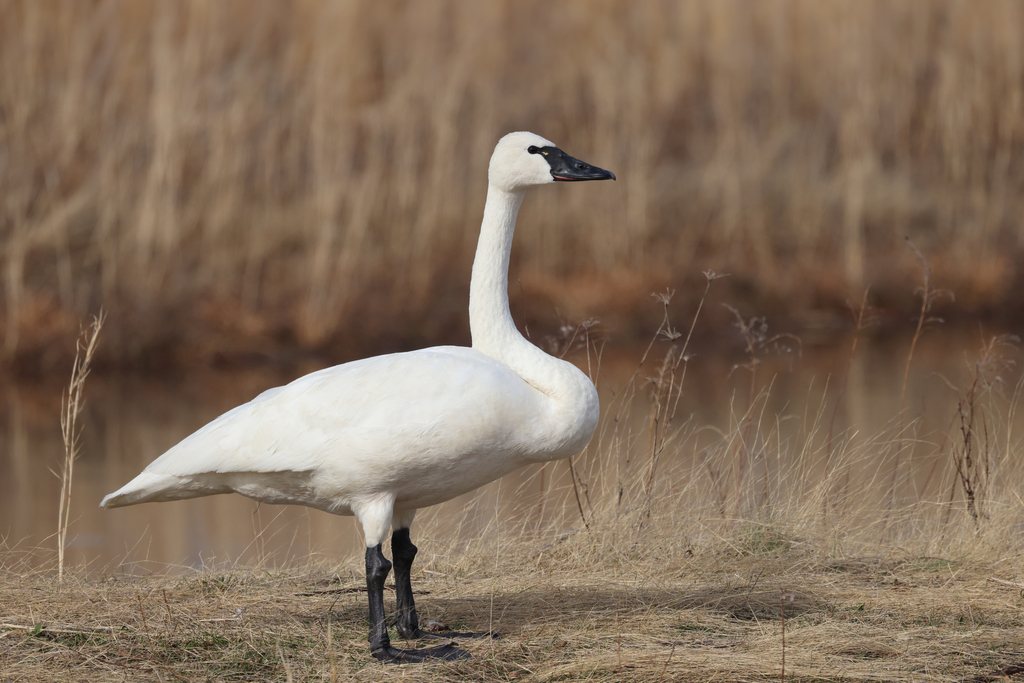
Photo: no rights reserved · CC0
Cygnus columbianus
Basic stats
Diet
Aquatic plants and crops
Habitat
Tundra pools, marshes, lakes and sheltered coasts
Range
Arctic Eurasia and North America, wintering farther south
Clutch size
Averages about 4 eggs
Incubation period
Averages about 31 days
Size
115–150cm
Wingspan
168–211cm
Weight
Averages about 6378g
The Tundra Swan is the smallest Holarctic swan, measuring 115–150 cm and spanning 168–211 cm. Adults are white with black feet and a mainly black bill whose yellow area varies between populations; a narrow pink line follows the mouth. The neck is comparatively short and the head rounded. AVONET gives an average mass of about 6,378 g (Wikipedia, general species account; AVONET, Tobias et al. 2022).
Across its range, the species nests beside pools and marshes on Arctic tundra, then migrates to lakes, flooded ground, coastal marshes and sheltered shores farther south. Aquatic vegetation dominates in summer, while wintering birds also graze and take leftover crops. Pairs form lasting bonds and build plant nests near water. Clutches average about four eggs and incubation about 31 days (Wikipedia, general species account; EltonTraits, Wilman et al. 2014; AnAge).
Quick answers
- What does the Tundra Swan eat?
- Aquatic plants and crops
- What habitat does the Tundra Swan live in?
- Tundra pools, marshes, lakes and sheltered coasts
- Where is the Tundra Swan found?
- Arctic Eurasia and North America, wintering farther south
- How many eggs does the Tundra Swan lay?
- Averages about 4 eggs
- How long are the eggs of the Tundra Swan incubated?
- Averages about 31 days
- How big is the Tundra Swan?
- 115–150cm
- What is the wingspan of the Tundra Swan?
- 168–211cm
- How much does the Tundra Swan weigh?
- Averages about 6378g