
 Wildlife
of Romania
Spotted Redshank
Waders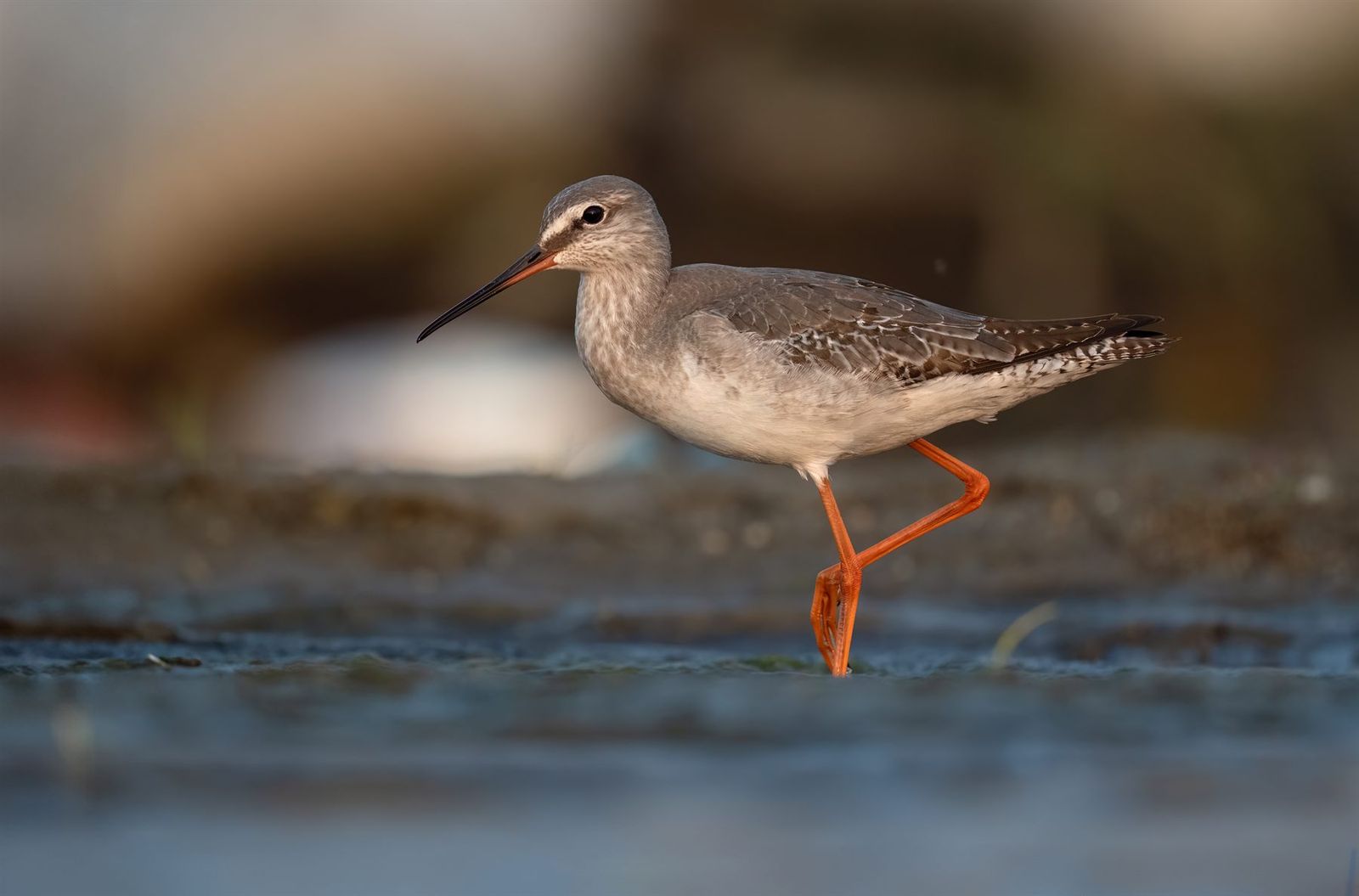
Photo: Mildeep · CC BY-SA 4.0 (May be cropped or resized)
Tringa erythropus
Basic stats
Diet
Mostly small invertebrates
Habitat
Open boggy taiga when breeding; shallow fresh and coastal wetlands at other seasons
Range
Breeds across the northern Palearctic; winters from western Europe and Africa to southern Asia
Clutch size
Usually 4 eggs
Size
29–31cm
Wingspan
61–67cm
Weight
Averages about 158g
The Spotted Redshank is a large, long-legged wader with striking seasonal plumages. Breeding adults become blackish with pale spotting, whereas winter birds are very pale grey; juveniles are grey-brown above with fine pale marks and barred underparts. The legs and basal bill are red, and a white oval on the back is exposed in flight. It measures 29–31 cm, spans 61–67 cm and averages about 158 g (Wikipedia, general species account; AVONET, Tobias et al. 2022).
Across its range, the species breeds on open, boggy taiga from northern Scandinavia east across the Arctic Palearctic. It migrates south to western Europe, the Mediterranean, Africa and tropical Asia, using shallow wetlands outside the nesting season. Small invertebrates dominate its diet, and birds forage by wading and probing or picking prey from wet surfaces. The nest is a ground scrape and the usual clutch contains four eggs (Wikipedia, general species account; EltonTraits, Wilman et al. 2014).
Where to see Spotted Redshank in Romania
GBIF records grouped by protected area. They show where the species has been reported, not that it is there now, and they are not population counts.
Recorded in 3 protected areas (1971–2026).
- Danube Delta Biosphere Reserve: 654 records (1971–2026)
- Balta Albă - Amara - Jirlău: 69 records (2017–2026)
- Letea Forest: 4 records (2023)
Quick answers
- What does the Spotted Redshank eat?
- Mostly small invertebrates
- What habitat does the Spotted Redshank live in?
- Open boggy taiga when breeding; shallow fresh and coastal wetlands at other seasons
- Where is the Spotted Redshank found?
- Breeds across the northern Palearctic; winters from western Europe and Africa to southern Asia
- How many eggs does the Spotted Redshank lay?
- Usually 4 eggs
- How big is the Spotted Redshank?
- 29–31cm
- What is the wingspan of the Spotted Redshank?
- 61–67cm
- How much does the Spotted Redshank weigh?
- Averages about 158g