
 Wildlife
of Romania
Red-necked Phalarope
Waders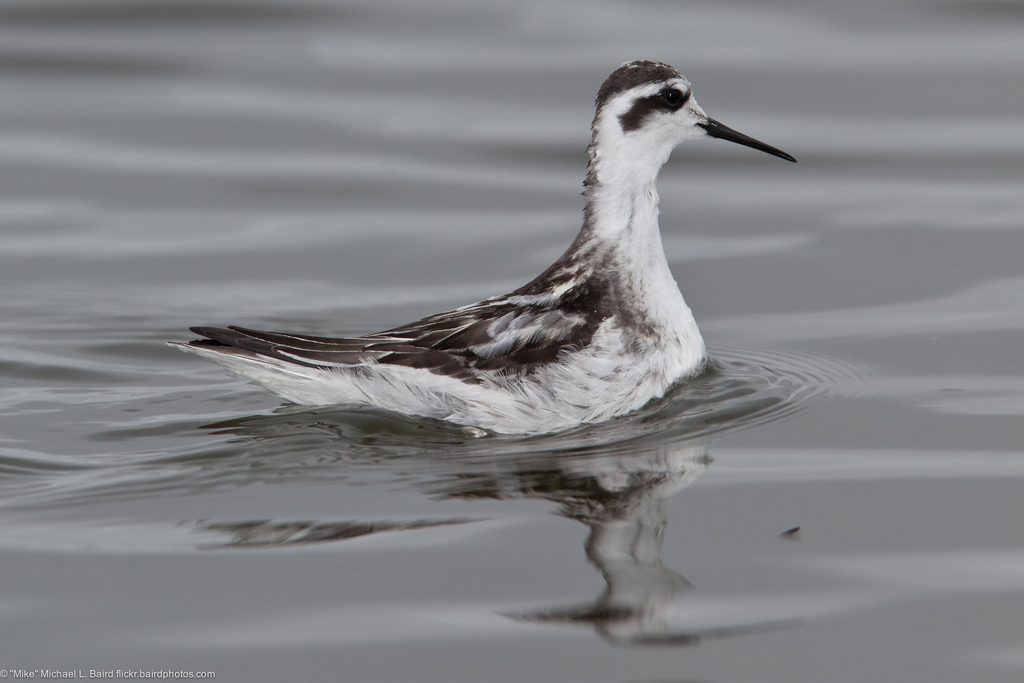
Photo: Mike Baird · CC BY 4.0 (May be cropped or resized)
Phalaropus lobatus
Basic stats
Diet
Mostly aquatic invertebrates, with some seeds
Habitat
Arctic wetlands when breeding; tropical ocean waters outside the breeding season
Range
Breeds across Arctic North America and Eurasia; winters at sea in tropical waters
Clutch size
Usually 4 eggs
Incubation period
About 20 days
Size
About 18cm
Weight
Averages about 37g
The Red-necked Phalarope is a small swimming wader with lobed toes and a fine, straight bill. Breeding females are more brightly marked than males, showing a chestnut neck and upper breast, dark face and white throat against grey upperparts. Away from the breeding season, birds become grey above and white below but retain a dark eye patch. A white wing stripe shows in flight (Wikipedia, general species account).
Breeding takes place around Arctic wetlands in Eurasia and North America, but much of the remaining year is spent on tropical seas. Birds often spin rapidly while feeding, creating water movement that brings tiny prey within reach; currents and upwellings can also concentrate food offshore. Invertebrates dominate the diet, supplemented by seeds (EltonTraits, Wilman et al. 2014). Males undertake incubation and chick care after females lay the clutch (Wikipedia, general species account).
Quick answers
- What does the Red-necked Phalarope eat?
- Mostly aquatic invertebrates, with some seeds
- What habitat does the Red-necked Phalarope live in?
- Arctic wetlands when breeding; tropical ocean waters outside the breeding season
- Where is the Red-necked Phalarope found?
- Breeds across Arctic North America and Eurasia; winters at sea in tropical waters
- How many eggs does the Red-necked Phalarope lay?
- Usually 4 eggs
- How long are the eggs of the Red-necked Phalarope incubated?
- About 20 days
- How big is the Red-necked Phalarope?
- About 18cm
- How much does the Red-necked Phalarope weigh?
- Averages about 37g