
 Wildlife
of Romania
Red Crossbill
Finches, Sparrows & Buntings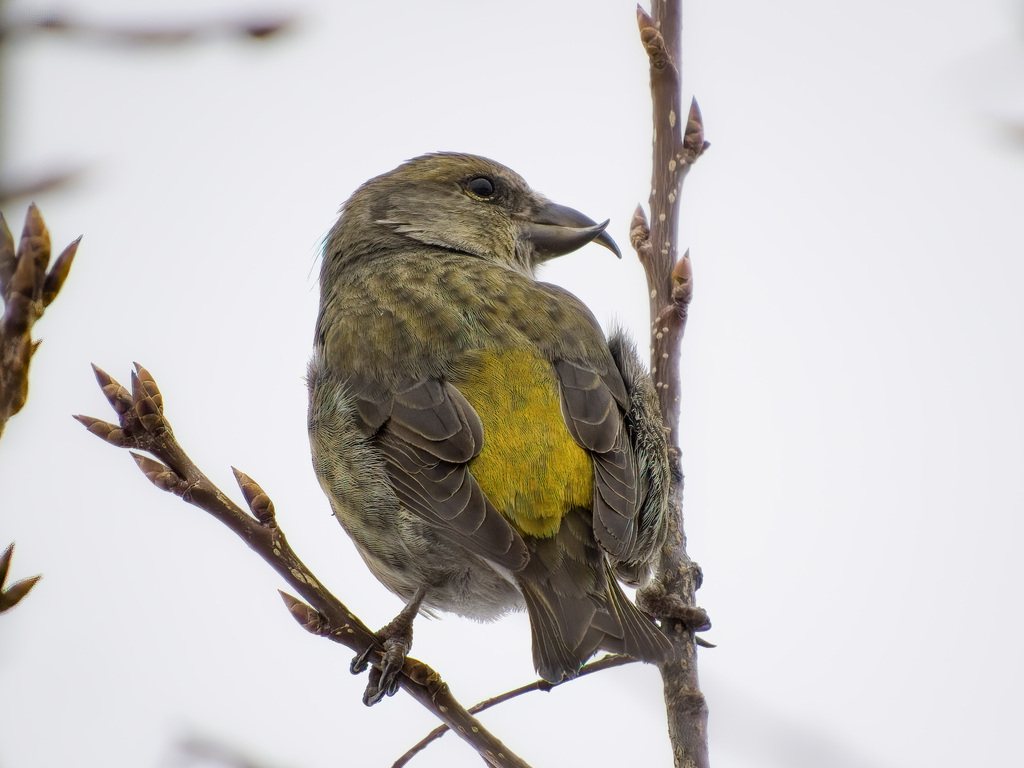
Photo: (c) Jason Alexander, some rights reserved (CC BY) · CC BY 4.0 (May be cropped or resized)
Loxia curvirostra
Basic stats
Diet
Seeds and other plant material, with insects also taken
Habitat
Coniferous forest
Range
Conifer forests across North America and Eurasia
Clutch size
About 3 eggs
Incubation period
About 13 days
Weight
Averages about 38g
The Red Crossbill is a compact finch named for the crossed tips of its mandibles. By inserting the bill between cone scales and levering them apart, it efficiently reaches the seeds within. Adult males are usually red or orange, females greenish or yellow, and juveniles grey-green with heavy streaking. Plumage, bill proportions and calls vary substantially among populations. The species averages about 38 g (Wikipedia, general species account; AVONET, Tobias et al. 2022).
Across North America and Eurasia, the species occupies coniferous forests and tracks the irregular production of cone seed. Many populations are nomadic and eruptive, dispersing widely when local crops fail, although some remain resident. Nesting can occur whenever an adequate cone supply is available rather than following a rigid season. Seeds and other plant material form most of the diet, with insects also taken. A typical clutch contains about three eggs and incubation lasts around 13 days (Wikipedia, general species account; EltonTraits, Wilman et al. 2014; AnAge).
Where to see Red Crossbill in Romania
GBIF records grouped by protected area. They show where the species has been reported, not that it is there now, and they are not population counts.
Recorded in 16 protected areas (1999–2025). The 8 with the most records:
- Munții Apuseni - Vlădeasa: 67 records (1999–2024)
- Parcul Natural Apuseni: 65 records (1999–2024)
- Harghita Mădăraș: 45 records (2018–2023)
- Parcul Natural Bucegi: 33 records (2000–2024)
- Piatra Craiului: 28 records (2008–2023)
- Mestecănișul de la Reci și Bălțile de la Ozun-Sântionlunca: 14 records (2022–2024)
- Munții Făgăraș: 13 records (2017–2025)
- Cheile Bicazului-Hășmaș National Park: 12 records (1999–2023)
Quick answers
- What does the Red Crossbill eat?
- Seeds and other plant material, with insects also taken
- What habitat does the Red Crossbill live in?
- Coniferous forest
- Where is the Red Crossbill found?
- Conifer forests across North America and Eurasia
- How many eggs does the Red Crossbill lay?
- About 3 eggs
- How long are the eggs of the Red Crossbill incubated?
- About 13 days
- How much does the Red Crossbill weigh?
- Averages about 38g