
 Wildlife
of Romania
Northern Wheatear
Thrushes, Chats & Flycatchers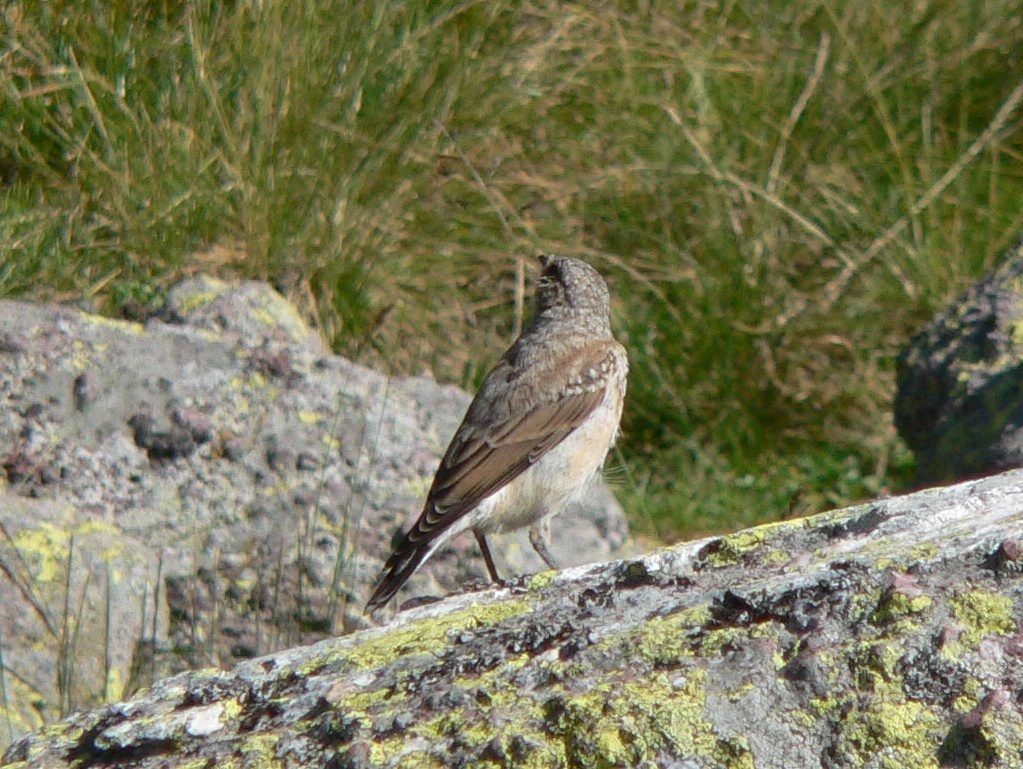
Photo: Mario Bassini · CC BY 4.0 (May be cropped or resized)
Oenanthe oenanthe
Basic stats
Diet
Insects and other invertebrates, with fruit also taken
Habitat
Open stony country, tundra, moorland, dunes and short grassland
Range
Breeds across Eurasia, Greenland and northern North America; winters in Africa
Clutch size
4–7 eggs
Incubation period
About 13–14 days
Size
14.5–16cm
Wingspan
26–32cm
Weight
Averages about 25g
The Northern Wheatear is a small ground-feeding chat whose white rump and white tail base form a bold pattern with the dark terminal bar. Breeding males have grey upperparts, black wings and a dark facial mask, while females are browner and juveniles more subdued. It often runs over open ground before pausing upright on a rock or low perch. The species measures 14.5–16 cm, spans 26–32 cm and averages about 25 g (Wikipedia, general species account; AVONET, Tobias et al. 2022).
Across its vast breeding range in Eurasia, Greenland and northern North America, the species occupies open stony ground, tundra, moorland, dunes and short grassland; all populations winter in Africa. It eats chiefly insects and other invertebrates, with fruit also represented in its diet. The female builds in a cavity such as a rock crevice, burrow or wall. Four to seven eggs are usual, and incubation lasts about 13–14 days (Wikipedia, general species account; EltonTraits, Wilman et al. 2014; AnAge).
Where to see Northern Wheatear in Romania
GBIF records grouped by protected area. They show where the species has been reported, not that it is there now, and they are not population counts.
Recorded in 16 protected areas (1971–2026). The 8 with the most records:
- Danube Delta Biosphere Reserve: 703 records (1971–2026)
- National Park Munții Măcinului: 111 records (2004–2024)
- Munții Făgăraș: 35 records (2017–2024)
- Parcul Natural Bucegi: 35 records (2009–2024)
- Harghita Mădăraș: 16 records (2023–2024)
- Piatra Craiului: 12 records (2016–2025)
- Munții Apuseni - Vlădeasa: 10 records (1996–2024)
- Rodna National Park: 7 records (2018–2024)
Quick answers
- What does the Northern Wheatear eat?
- Insects and other invertebrates, with fruit also taken
- What habitat does the Northern Wheatear live in?
- Open stony country, tundra, moorland, dunes and short grassland
- Where is the Northern Wheatear found?
- Breeds across Eurasia, Greenland and northern North America; winters in Africa
- How many eggs does the Northern Wheatear lay?
- 4–7 eggs
- How long are the eggs of the Northern Wheatear incubated?
- About 13–14 days
- How big is the Northern Wheatear?
- 14.5–16cm
- What is the wingspan of the Northern Wheatear?
- 26–32cm
- How much does the Northern Wheatear weigh?
- Averages about 25g