
 Wildlife
of Romania
Mound-building Mouse
Mice & Rats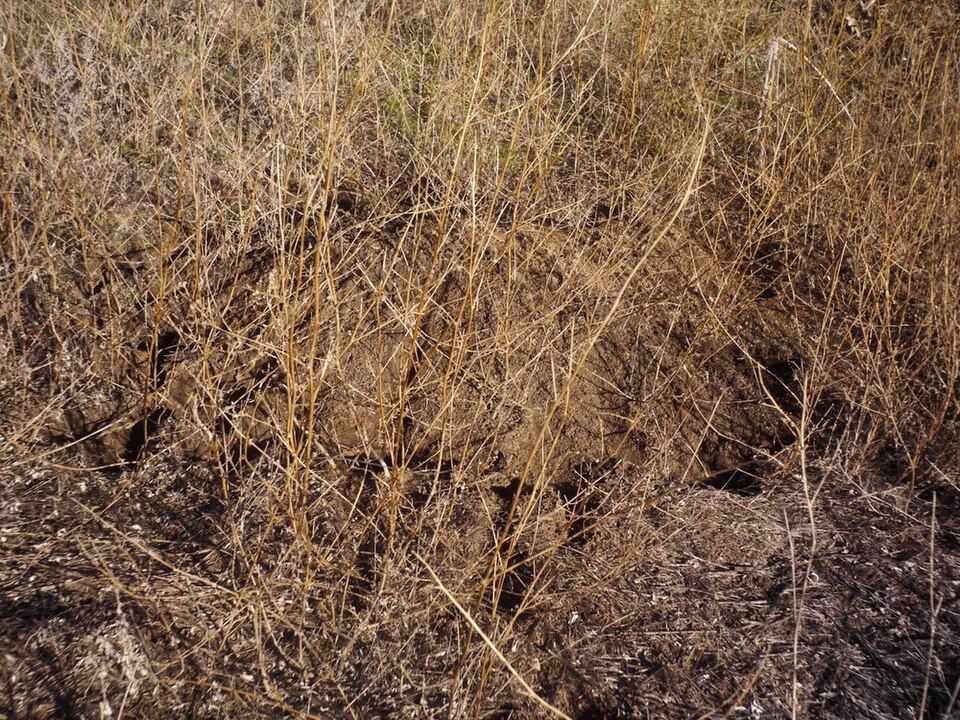
Photo: Roman · CC BY 4.0 (May be cropped or resized)
Mus spicilegus
Basic stats
Diet
Seeds and grains stored in its mound
Habitat
Grassland, steppe, cultivated land, orchards, clearings and woodland borders
Range
Parts of Europe, including Austria, Hungary, Romania, Russia and Ukraine
Litter size
6.7 on average in central Ukraine
Gestation period
About 20 days
Size
Head and body 70–80mm; tail 55–65mm
Weight
About 19.9g
The mound-building mouse, also called the steppe mouse, is a small rodent of the family Muridae. Its fur is generally plain grey without any reddish tint, although some populations are two-toned with paler undersides. Its tail is more slender than in related species. In appearance it closely resembles the common house mouse, and the two are often mistaken for one another; the main difference is the mound-building habit, which shows only at certain times of year. Head and body measure 70–80mm, the tail 55–65mm, and adults weigh about 19.9g (Wikipedia, general species account; AnAge).
It lives in grassland, steppe, cultivated land, orchards, clearings and woodland edges across parts of Europe. Its signature habit is building mounds in autumn, a task shared by groups of four to fourteen closely related mice between about mid-August and mid-November. Each mound sits over storage chambers holding seeds and grains, with a nest chamber beneath. Breeding runs from about March to October, and young females may produce four or five litters in a year, averaging 6.7 young in central Ukraine. Gestation lasts about 20 days (Wikipedia, general species account; AnAge).
Quick answers
- What does the Mound-building Mouse eat?
- Seeds and grains stored in its mound
- What habitat does the Mound-building Mouse live in?
- Grassland, steppe, cultivated land, orchards, clearings and woodland borders
- Where is the Mound-building Mouse found?
- Parts of Europe, including Austria, Hungary, Romania, Russia and Ukraine
- What is the litter size of the Mound-building Mouse?
- 6.7 on average in central Ukraine
- How long is the gestation period of the Mound-building Mouse?
- About 20 days
- How big is the Mound-building Mouse?
- Head and body 70–80mm; tail 55–65mm
- How much does the Mound-building Mouse weigh?
- About 19.9g