
 Wildlife
of Romania
Little Tern
Gulls, Terns, Skuas & Auks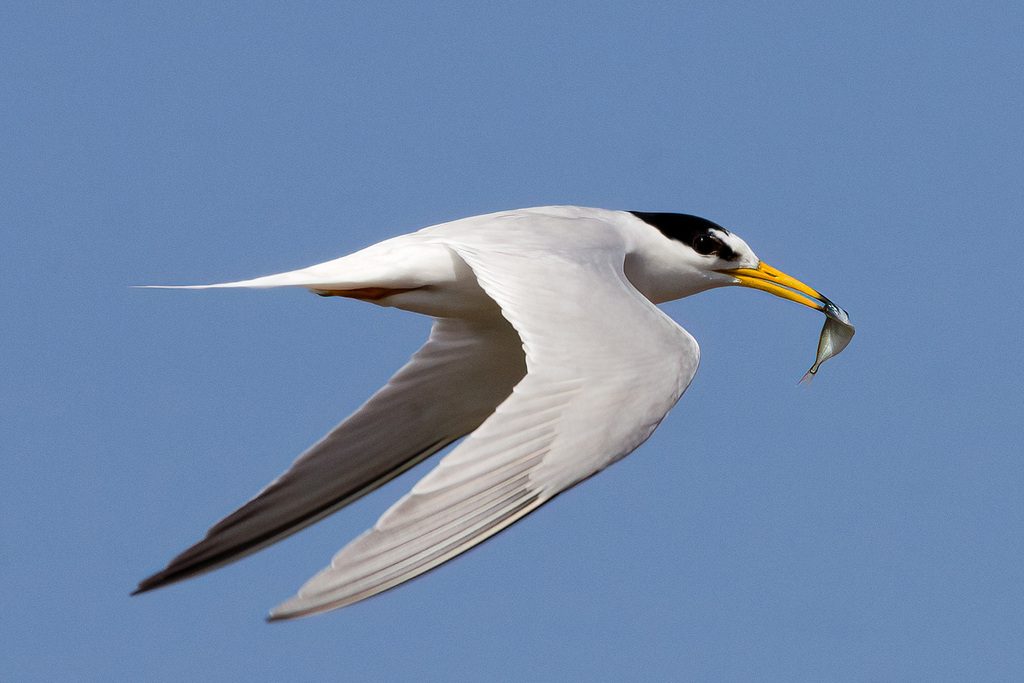
Photo: PotMart186 · CC BY-SA 4.0 (May be cropped or resized)
Sternula albifrons
Basic stats
Diet
Mostly small fish and aquatic invertebrates
Habitat
Sandy or shingly coasts, riverbanks, islands, saltpans and lagoons
Range
Breeds across Europe, Africa, Asia and Australasia; many populations migrate to tropical coasts
Clutch size
Usually 2 eggs
Incubation period
About 21 days
Weight
Averages about 57g
The Little Tern is a very small, quick-flying tern with narrow wings, a deeply forked tail and a yellow bill tipped black in breeding plumage. Adults have a black cap separated from the bill by a white forehead, pale grey upperparts and white underparts. Outside the breeding season the bill darkens and the head pattern becomes less complete. The species averages about 57 g (Wikipedia, general species account; AVONET, Tobias et al. 2022).
Across its broad Old World range, the species nests on open sand or shingle beside coasts and rivers, as well as on islands and saltpans. Many populations migrate to tropical shores after breeding. Birds hover before making shallow plunges for small fish and aquatic invertebrates, usually feeding in lagoons, estuaries, rivers or close inshore. The nest is a minimally lined scrape on bare ground. A typical clutch contains two eggs, incubated for about 21 days (Wikipedia, general species account; AnAge).
Quick answers
- What does the Little Tern eat?
- Mostly small fish and aquatic invertebrates
- What habitat does the Little Tern live in?
- Sandy or shingly coasts, riverbanks, islands, saltpans and lagoons
- Where is the Little Tern found?
- Breeds across Europe, Africa, Asia and Australasia; many populations migrate to tropical coasts
- How many eggs does the Little Tern lay?
- Usually 2 eggs
- How long are the eggs of the Little Tern incubated?
- About 21 days
- How much does the Little Tern weigh?
- Averages about 57g