 Wildlife
of Romania
Hazel Dormouse
Dormice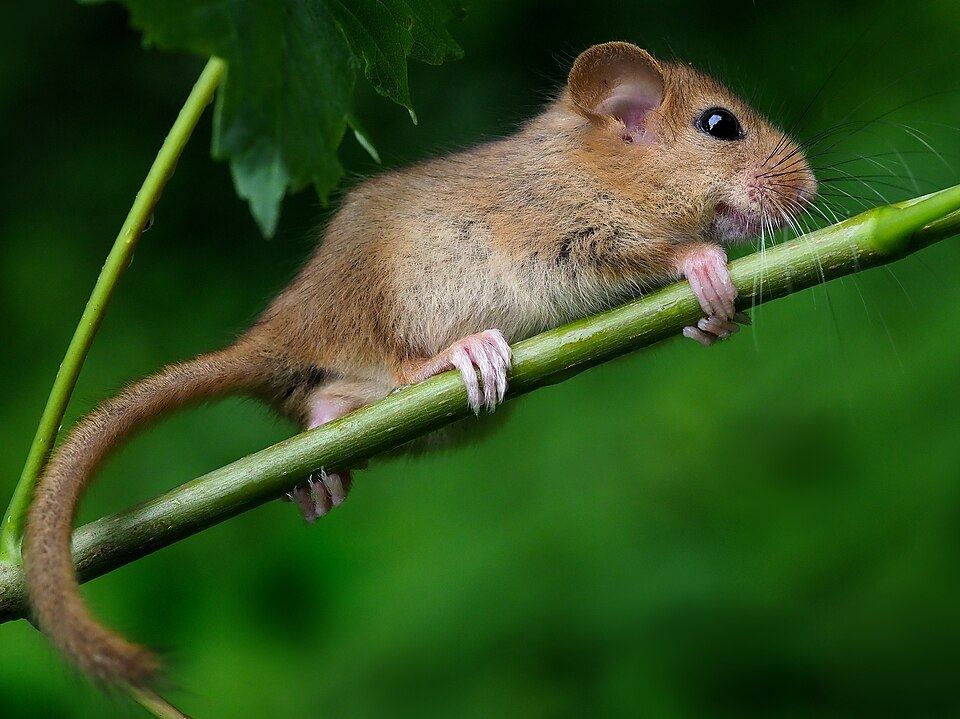
Photo: Frank Vassen from Brussels, Belgium · CC BY 2.0 (May be cropped or resized)
Muscardinus avellanarius
Basic stats
Habitat
Deciduous woodland, hedgerows and scrub, with honeysuckle, yew and birch
Range
Northern Europe and Asia Minor; the one native dormouse of the British Isles
Litter size
About 4
Gestation period
23 days
Weight
17–20g, rising to 30–40g before hibernation
The hazel dormouse, also called the common dormouse, is a small species native to Europe and the only living member of the genus Muscardinus. Its fur is reddish brown, sometimes shading to golden or yellow-orange and paler on the underside. It has large black eyes, small undeveloped ears and a long tail covered entirely in hair. It weighs 17–20g, rising to 30–40g just before hibernation. It belongs to the family Gliridae (Wikipedia, general species account; GBIF description, Gliridae).
Its range covers northern Europe and Asia Minor, and in the British Isles it is the one dormouse that occurs naturally, often just called the dormouse there. Ireland has no native dormouse, yet the hazel dormouse was found in County Kildare in 2010. It favours deciduous woodland, hedgerows and scrub, and it is more abundant where honeysuckle, yew and birch grow. Almost wholly tree-dwelling, it is nocturnal and seldom travels more than 70m from its nest. It hibernates from October until April or May, and in cold, wet weather with little food it drops into torpor. Litters average four young after a gestation of 23 days (Wikipedia, general species account; AnAge).
Quick answers
- What habitat does the Hazel Dormouse live in?
- Deciduous woodland, hedgerows and scrub, with honeysuckle, yew and birch
- Where is the Hazel Dormouse found?
- Northern Europe and Asia Minor; the one native dormouse of the British Isles
- What is the litter size of the Hazel Dormouse?
- About 4
- How long is the gestation period of the Hazel Dormouse?
- 23 days
- How much does the Hazel Dormouse weigh?
- 17–20g, rising to 30–40g before hibernation