
 Wildlife
of Romania
Graylag Goose
Ducks, Geese & Swans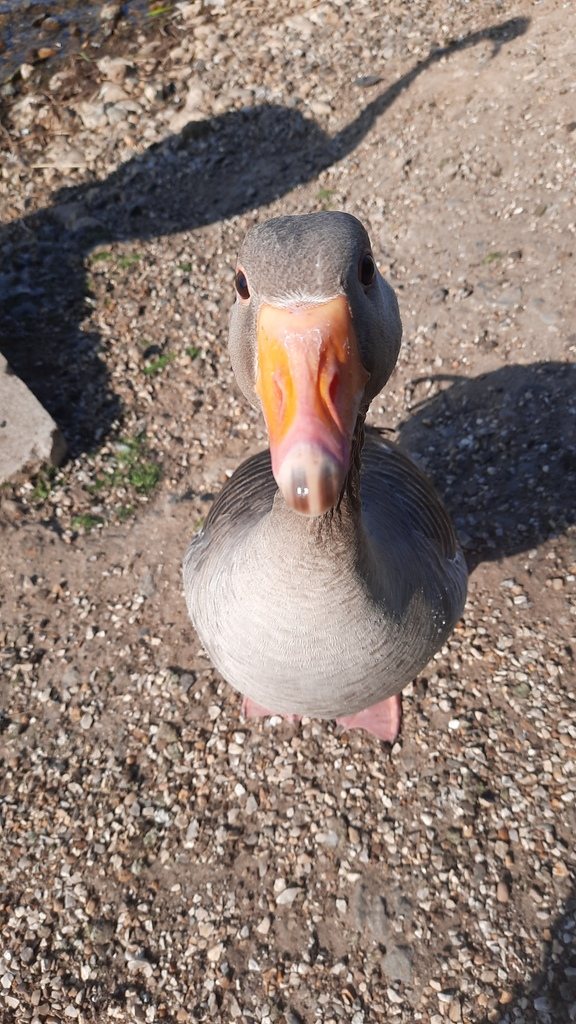
Photo: (c) olmagon, some rights reserved (CC BY) · CC-BY (May be cropped or resized)
Anser anser
Basic stats
Diet
Grasses, other vegetation and agricultural crops
Habitat
Lakes, marshes, moorland and coastal islands when breeding; wetlands and farmland at other seasons
Range
Widely distributed across Europe and Asia, with northern populations generally moving south in winter
Clutch size
Usually 3–5 eggs
Size
74–91cm
Wingspan
147–180cm
Weight
Averages about 3302g
The Graylag Goose is a large, heavy goose with a thick neck, bulky body and substantial head and bill. Its plumage is mottled grey-brown, with a paler forewing and rump, while the legs are pink and the bill orange or pink. Adults measure 74–91 cm across a 147–180 cm wingspan, and males tend to exceed females in size. AVONET gives a mean mass of about 3,302 g (Wikipedia, general species account; AVONET, Tobias et al. 2022).
Across Europe and Asia, the species breeds beside lakes and in marshes, moorland or on coastal islands. Northern birds generally move south for winter, whereas many populations remain resident. Winter habitat includes estuaries, flooded fields, pasture and freshwater marshes. Geese graze on grasses and other vegetation and may feed on agricultural crops. Pairs usually remain together, nesting on the ground among plants and laying three to five eggs (Wikipedia, general species account; EltonTraits, Wilman et al. 2014).
Where to see Graylag Goose in Romania
GBIF records grouped by protected area. They show where the species has been reported, not that it is there now, and they are not population counts.
Recorded in 5 protected areas (1971–2026).
- Danube Delta Biosphere Reserve: 1,765 records (1971–2026)
- Balta Albă - Amara - Jirlău: 83 records (2012–2026)
- Letea Forest: 10 records (1994–2024)
- Parcul Natural Comana: 5 records (2020–2024)
- Rezervația Naturală Roșca-Buhaiova: 5 records (2018–2024)
Quick answers
- What does the Graylag Goose eat?
- Grasses, other vegetation and agricultural crops
- What habitat does the Graylag Goose live in?
- Lakes, marshes, moorland and coastal islands when breeding; wetlands and farmland at other seasons
- Where is the Graylag Goose found?
- Widely distributed across Europe and Asia, with northern populations generally moving south in winter
- How many eggs does the Graylag Goose lay?
- Usually 3–5 eggs
- How big is the Graylag Goose?
- 74–91cm
- What is the wingspan of the Graylag Goose?
- 147–180cm
- How much does the Graylag Goose weigh?
- Averages about 3302g