
 Wildlife
of Romania
European Herring Gull
Gulls, Terns, Skuas & Auks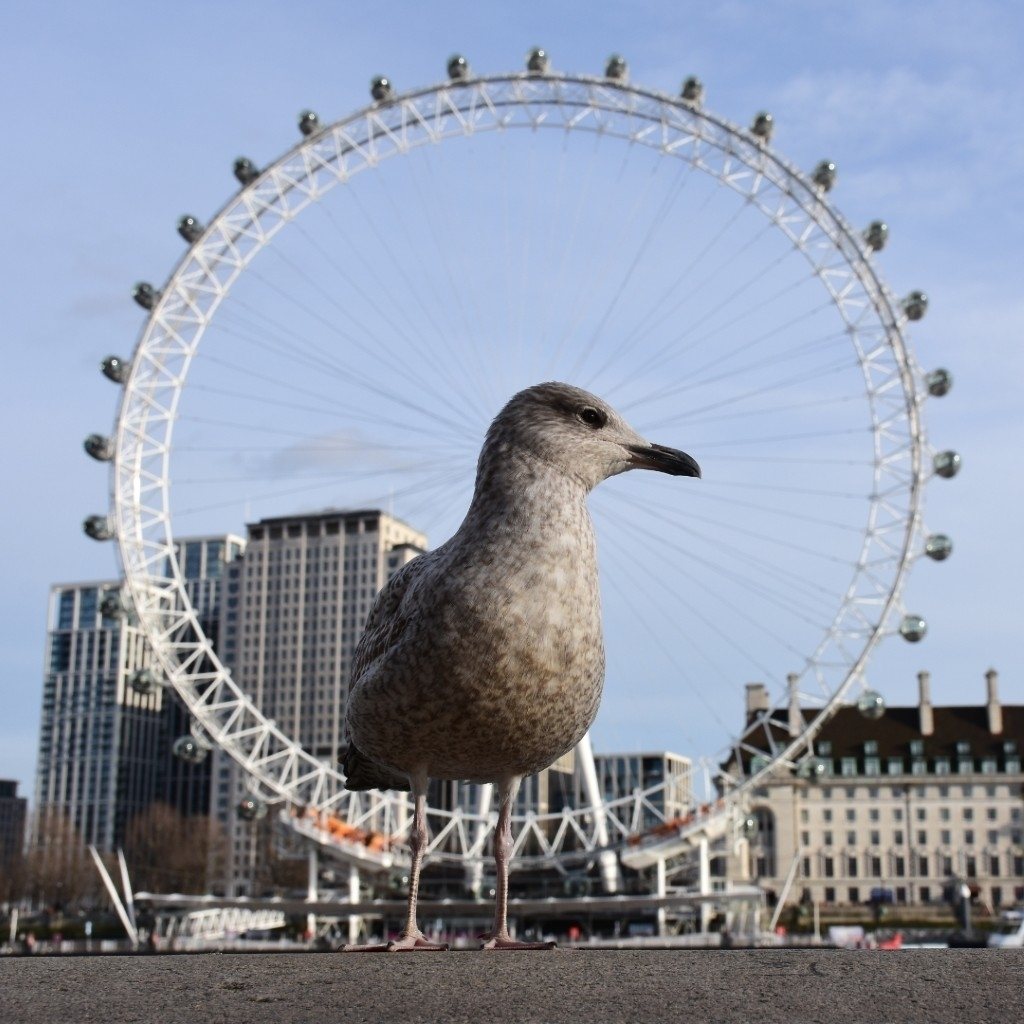
Photo: (c) Zac Peterson, some rights reserved (CC BY) · CC BY 4.0 (May be cropped or resized)
Larus argentatus
Basic stats
Diet
Fish, invertebrates and carrion
Habitat
Coasts, islands, estuaries and towns
Range
Northern and western Europe
Clutch size
Usually 3 eggs
Incubation period
About 26 days
Size
55–67cm
Wingspan
125–155cm
Weight
Averages about 1091g
The European Herring Gull is a large gull, 55–67 cm long with a 125–155 cm wingspan. Adults have a pale grey back, white head and underparts, black-and-white wingtips, pink legs and a yellow bill marked red. AVONET records an average mass of about 1,091 g and classifies it as a partly migratory coastal predator with generalist habits (Wikipedia, general species account; AVONET, Tobias et al. 2022).
It breeds around northern and western European coasts, with many birds resident and colder-region populations moving south in winter. Coasts, estuaries, islands and urban settings all provide food. Fish form 40% of the EltonTraits diet profile, invertebrates 30% and carrion 20%. A typical clutch has three eggs; AnAge gives an incubation period of about 26 days (Wikipedia, general species account; EltonTraits, Wilman et al. 2014; AnAge).
Quick answers
- What does the European Herring Gull eat?
- Fish, invertebrates and carrion
- What habitat does the European Herring Gull live in?
- Coasts, islands, estuaries and towns
- Where is the European Herring Gull found?
- Northern and western Europe
- How many eggs does the European Herring Gull lay?
- Usually 3 eggs
- How long are the eggs of the European Herring Gull incubated?
- About 26 days
- How big is the European Herring Gull?
- 55–67cm
- What is the wingspan of the European Herring Gull?
- 125–155cm
- How much does the European Herring Gull weigh?
- Averages about 1091g