
 Wildlife
of Romania
Eurasian Skylark
Larks, Pipits & Wagtails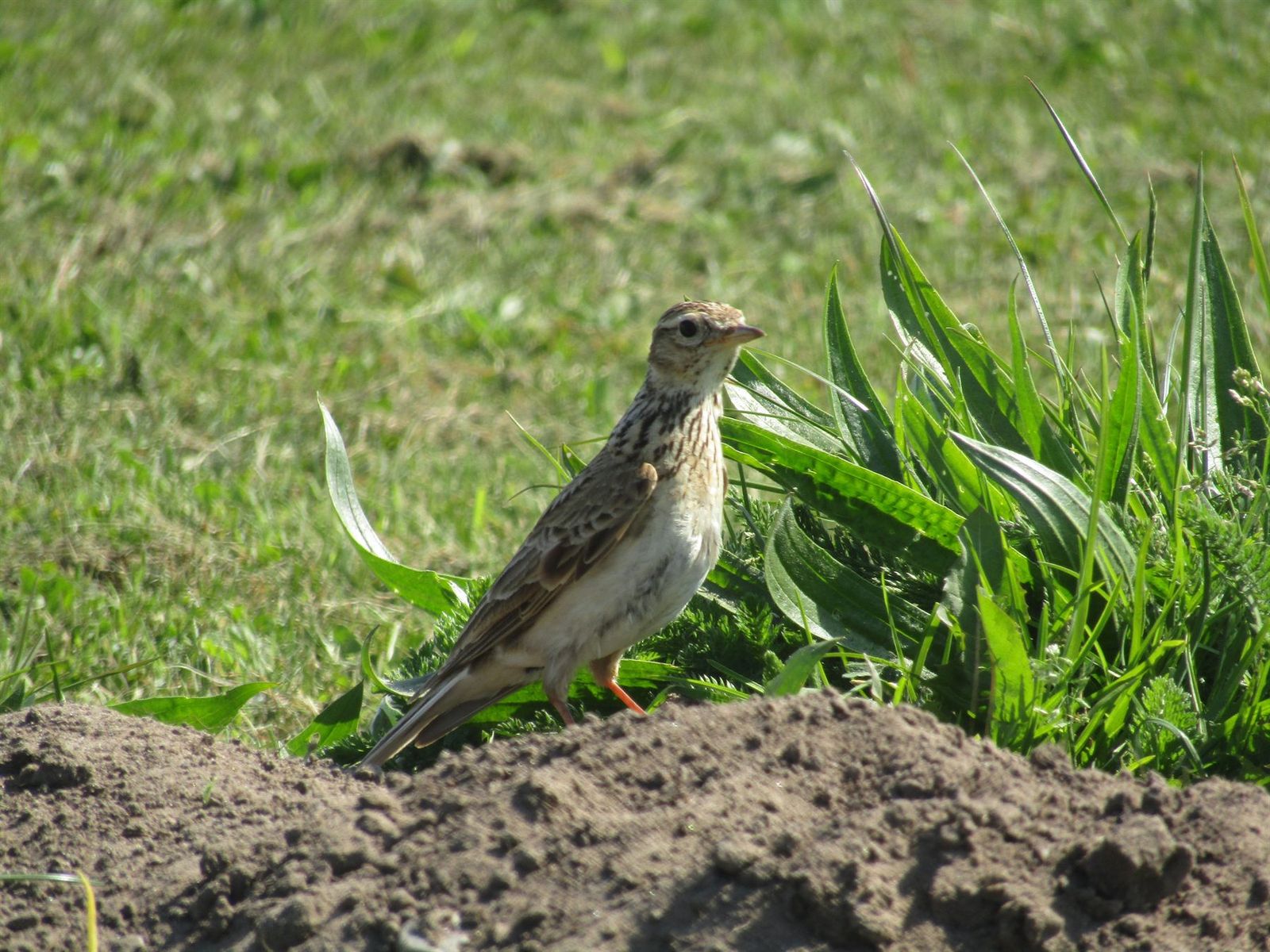
Photo: Kolforn · CC BY-SA 4.0 (May be cropped or resized)
Alauda arvensis
Basic stats
Diet
Insects, seeds and other plant material
Habitat
Open farmland, heath, grassland and moorland
Range
Europe and temperate Asia, with introduced populations in Australasia, Hawaii and western Canada
Clutch size
3–5 eggs
Incubation period
About 11 days
Size
18–19cm
Weight
Averages about 37g
The Eurasian Skylark is a streaked grey-brown lark with paler underparts, a small erectile crest and white edging on the tail and rear of the wings. Males and females look alike, although the male has broader wings suited to prolonged song flight. Its celebrated warbling song is delivered while the bird rises, circles or hovers high over open ground. The species measures 18–19 cm and averages about 37 g (Wikipedia, general species account; AVONET, Tobias et al. 2022).
Across Europe and temperate Asia, the species inhabits farmland, heath, grassland and other open country; eastern populations move farther south in winter, while many western birds shift shorter distances. It walks over bare ground while searching for insects, seeds and young plant material. The female makes a grass-lined hollow in the soil away from woody cover. Three to five eggs are incubated for about 11 days, and both parents feed the chicks (Wikipedia, general species account; EltonTraits, Wilman et al. 2014; AnAge).
Where to see Eurasian Skylark in Romania
GBIF records grouped by protected area. They show where the species has been reported, not that it is there now, and they are not population counts.
Recorded in 11 protected areas (1971–2026). The 8 with the most records:
- Danube Delta Biosphere Reserve: 257 records (1971–2025)
- Mestecănișul de la Reci și Bălțile de la Ozun-Sântionlunca: 42 records (2016–2026)
- National Park Munții Măcinului: 33 records (2002–2026)
- Parcul Natural Bucegi: 15 records (2010–2024)
- Trascău: 14 records (2003–2024)
- Balta Albă - Amara - Jirlău - Lacul Sărat Câineni: 13 records (2012–2024)
- Munții Făgăraș: 6 records (2016–2024)
- Iron Gates Natural Park: 4 records (2020–2024)
Quick answers
- What does the Eurasian Skylark eat?
- Insects, seeds and other plant material
- What habitat does the Eurasian Skylark live in?
- Open farmland, heath, grassland and moorland
- Where is the Eurasian Skylark found?
- Europe and temperate Asia, with introduced populations in Australasia, Hawaii and western Canada
- How many eggs does the Eurasian Skylark lay?
- 3–5 eggs
- How long are the eggs of the Eurasian Skylark incubated?
- About 11 days
- How big is the Eurasian Skylark?
- 18–19cm
- How much does the Eurasian Skylark weigh?
- Averages about 37g