
 Wildlife
of Romania
Eurasian Curlew
Waders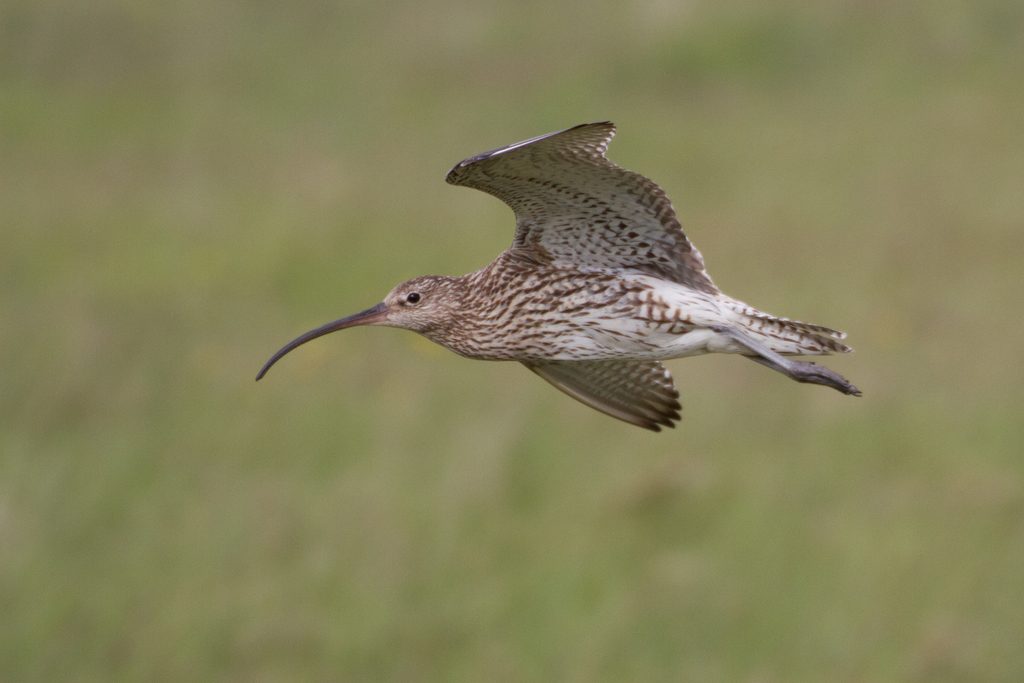
Photo: Joanne Goldby · CC BY-SA 4.0 (May be cropped or resized)
Numenius arquata
Basic stats
Diet
Invertebrates, fruit and seeds
Habitat
Open grassland, marshy fields, moorland, mudflats and coasts
Range
Breeds across temperate Europe and Asia; winters in Africa, southern Europe and southern Asia
Clutch size
4 eggs
Incubation period
About four weeks
Size
50–60cm
Wingspan
89–106cm
Weight
Averages about 803g
The Eurasian Curlew is a very large wader, 50–60 cm long, with a 89–106 cm wingspan. Its grey-brown plumage, pale back, blue-grey legs and exceptionally long, smoothly downcurved bill form a distinctive profile. Females and males are coloured alike, although the female usually carries the longer bill. The far-carrying, rising call is another conspicuous feature, particularly around breeding ground (Wikipedia, general species account).
The species breeds across temperate Eurasia and most populations travel to southern Europe, Africa or southern Asia for winter; some remain year-round in milder coastal areas. It probes soft ground for invertebrates and also takes fruit and seeds (EltonTraits, Wilman et al. 2014). Outside the breeding period it often gathers socially. A simple scrape in meadow or comparable open habitat receives four eggs, with both adults incubating for roughly four weeks (Wikipedia, general species account).
Where to see Eurasian Curlew in Romania
GBIF records grouped by protected area. They show where the species has been reported, not that it is there now, and they are not population counts.
Recorded in 3 protected areas (1971–2026).
- Danube Delta Biosphere Reserve: 429 records (1971–2026)
- Balta Albă - Amara - Jirlău: 69 records (2017–2026)
- Letea Forest: 5 records (2021–2024)
Quick answers
- What does the Eurasian Curlew eat?
- Invertebrates, fruit and seeds
- What habitat does the Eurasian Curlew live in?
- Open grassland, marshy fields, moorland, mudflats and coasts
- Where is the Eurasian Curlew found?
- Breeds across temperate Europe and Asia; winters in Africa, southern Europe and southern Asia
- How many eggs does the Eurasian Curlew lay?
- 4 eggs
- How long are the eggs of the Eurasian Curlew incubated?
- About four weeks
- How big is the Eurasian Curlew?
- 50–60cm
- What is the wingspan of the Eurasian Curlew?
- 89–106cm
- How much does the Eurasian Curlew weigh?
- Averages about 803g