 Wildlife
of Romania
Bank Swallow
Swallows & Martins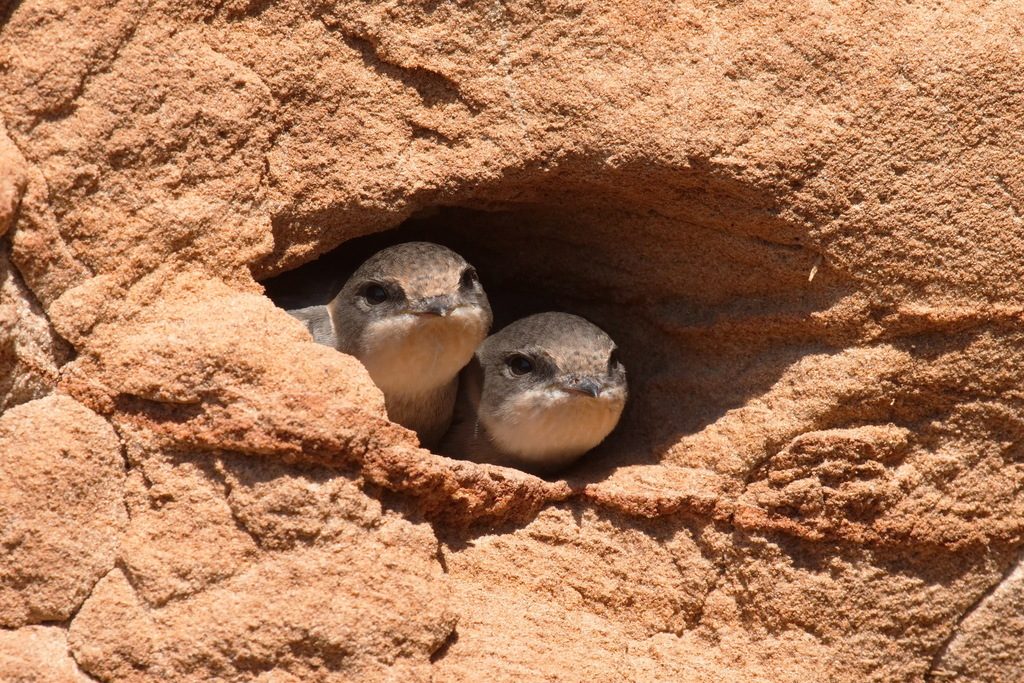
Photo: Вячеслав Юсупов · CC BY 4.0 (May be cropped or resized)
Riparia riparia
Basic stats
Diet
Flying insects
Habitat
Rivers, lakes and coasts with exposed sand, gravel or earth banks for nesting
Range
Breeds across the Holarctic; winters in South America, Africa and southern Asia
Clutch size
Usually 4–5 eggs
Incubation period
About 15 days
Weight
Averages about 13g
The Bank Swallow is a small, agile swallow with plain brown upperparts, white underparts and a narrow brown band across the breast. Its dark bill, brown legs and quick, jerky flight reinforce its understated appearance; young birds show warmer feather edges. The breast band and compact size help distinguish it from several other swallows. Adults average about 13 g and have a mean wing length of roughly 101.8 mm (Wikipedia, general species account; AVONET, Tobias et al. 2022).
The species breeds across the Holarctic and winters in South America, Africa and southern Asia. It remains closely associated with rivers, lakes and coasts, where flying insects—especially gnats and other flies with aquatic larvae—are abundant. Sociable colonies excavate nesting tunnels in exposed banks of sand, gravel or similar soft material, placing feathers and vegetation in a chamber at the end. Clutches usually contain four or five eggs, and incubation averages about 15 days (Wikipedia, general species account; EltonTraits, Wilman et al. 2014; AnAge).
Where to see Bank Swallow in Romania
GBIF records grouped by protected area. They show where the species has been reported, not that it is there now, and they are not population counts.
Recorded in 8 protected areas (1971–2026).
- Danube Delta Biosphere Reserve: 781 records (1971–2026)
- Balta Albă - Amara - Jirlău: 37 records (2012–2024)
- National Park Munții Măcinului: 19 records (2008–2024)
- Mestecănișul de la Reci și Bălțile de la Ozun-Sântionlunca: 12 records (2017–2025)
- Piatra Craiului: 6 records (2016–2024)
- Cheile Bicazului-Hășmaș National Park: 4 records (2005–2023)
- Parcul Natural Comana: 4 records (2012–2024)
- Văcărești Nature Park: 4 records (2009–2022)
Quick answers
- What does the Bank Swallow eat?
- Flying insects
- What habitat does the Bank Swallow live in?
- Rivers, lakes and coasts with exposed sand, gravel or earth banks for nesting
- Where is the Bank Swallow found?
- Breeds across the Holarctic; winters in South America, Africa and southern Asia
- How many eggs does the Bank Swallow lay?
- Usually 4–5 eggs
- How long are the eggs of the Bank Swallow incubated?
- About 15 days
- How much does the Bank Swallow weigh?
- Averages about 13g